Inside
the mountain.
Edvard Grieg
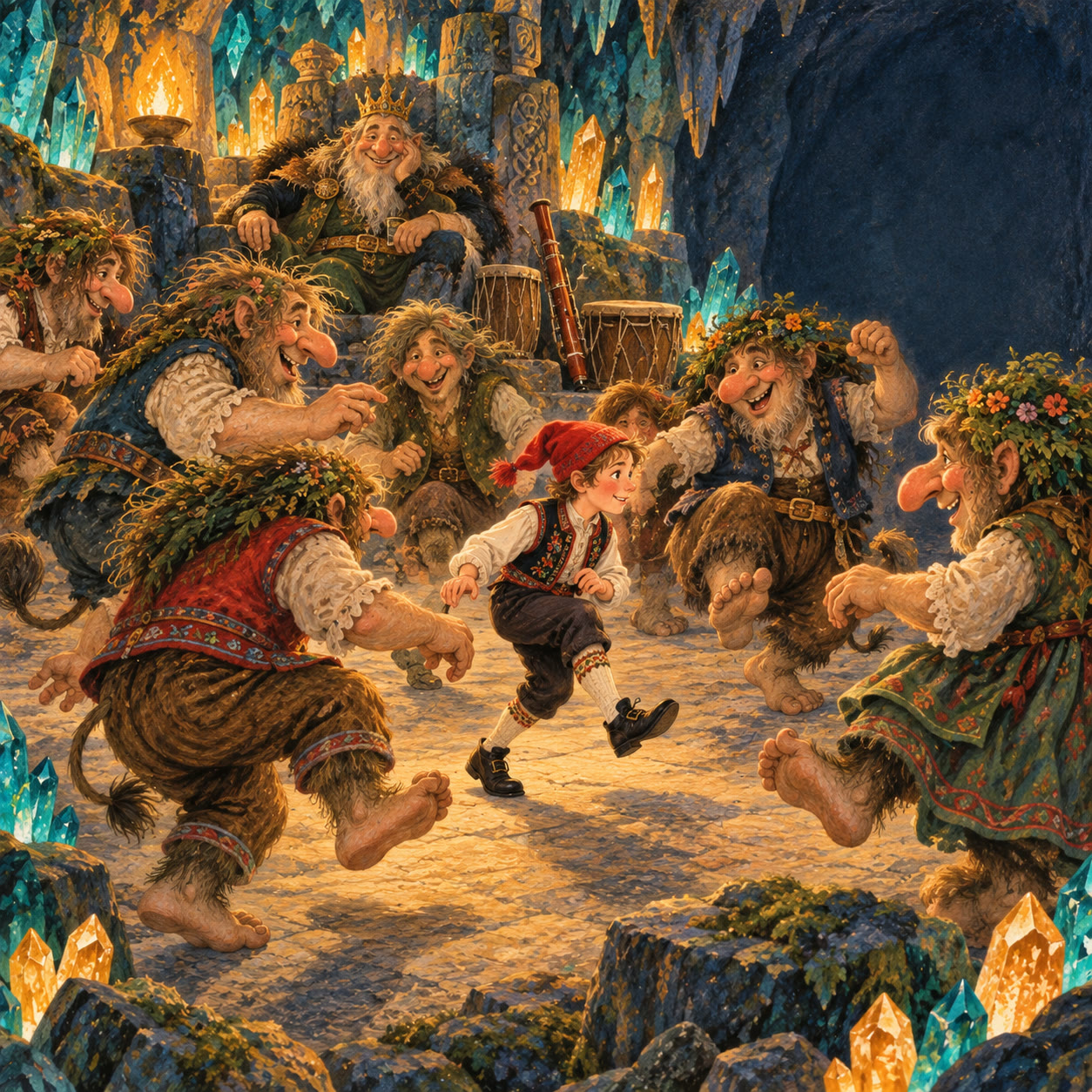
Shh. The trolls are waking up.
Can you hear them tiptoe?
Creep into the Troll King’s hall, hear a sneaky tune grow louder and faster, and make a troll march of your own.
A letter
for Grieg.
In Norway, people tell stories about trolls who live inside the mountains.
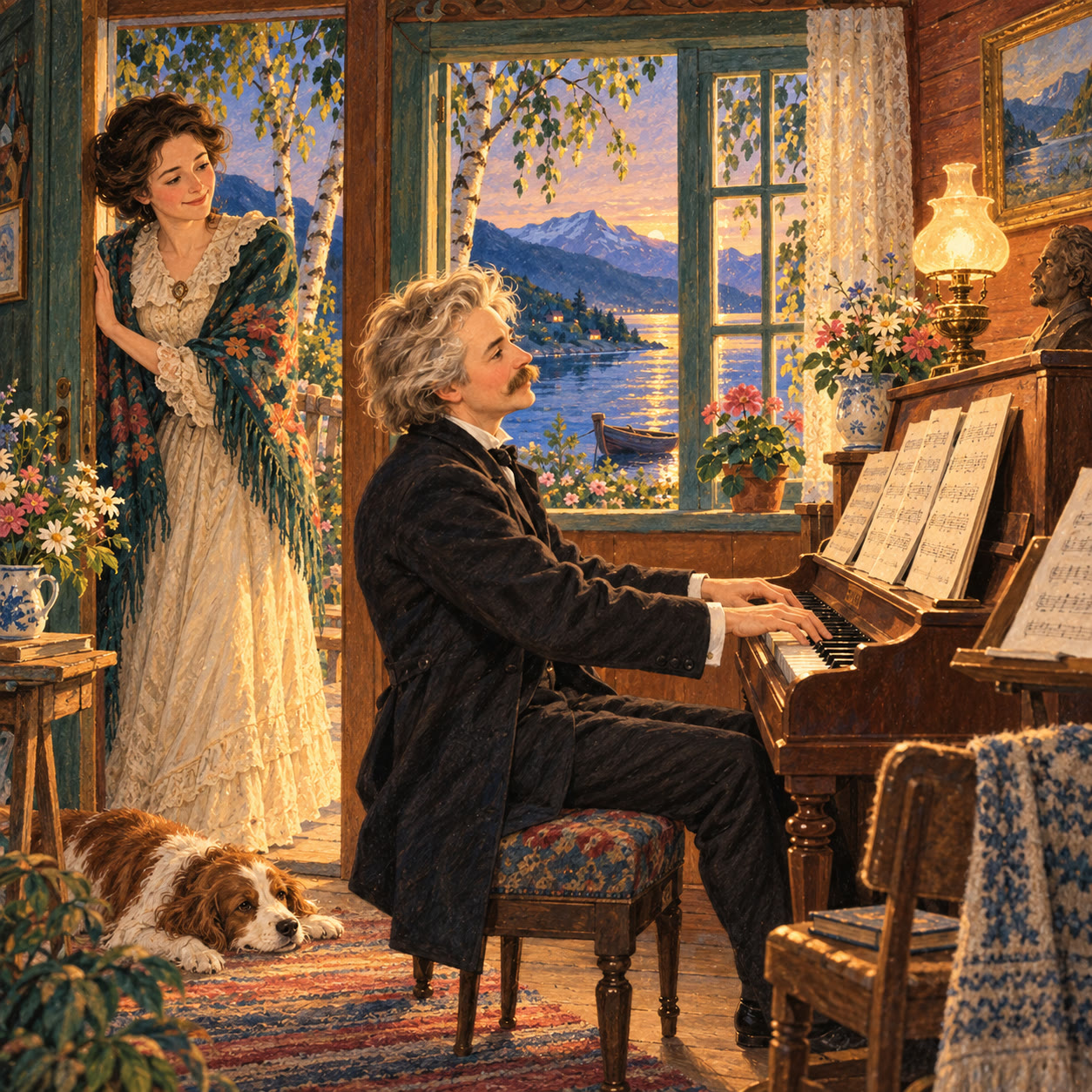
Edvard Grieg was a Norwegian composer. His wife Nina was a singer. One day in 1874, a letter arrived from the writer Henrik Ibsen. Ibsen had written a play about a young man called Peer Gynt, and he asked Grieg to write the music for it.
It was a hard job. Grieg worked and worked, and in the end he wrote 26 pieces of music for the play. One of them takes us deep inside a mountain, to the hall of the Troll King.
Peer and the trolls
In the play, Peer finds himself in the great hall of the Mountain King. Trolls, gnomes and goblins crowd all around him. The trolls are cross! They shout about pulling his hair and biting him. They even talk about cooking him for dinner.
The Troll King calms them down. He has a plan: Peer should marry his daughter and become a troll too. Peer says no. When the little trolls chase him, church bells ring far away. The trolls run off screaming, and the whole hall falls down and vanishes.
Grieg’s troll joke
While he was writing it in 1874, Grieg wrote to his friend Frants Beyer about his music for the Troll King’s hall. He said he could hardly bear to listen to it, because it sounded so much of cowpats!
He was joking, of course. Grieg made his trolls sound silly, stompy and very pleased with themselves on purpose. He hoped the people listening would hear the joke too.
Edvard and Nina
In 1867 Edvard married his cousin, Nina Hagerup. Nina became famous for singing his songs. Later they made their home near Bergen, in a house called Troldhaugen. The name means Troll Hill!
Edvard was a small man, only about 152 centimetres tall, but his music was big. People say he sat on a pile of Beethoven’s music to reach the piano keys.
Listen closely.
The trolls start very, very quietly, so turn it up! Then listen to them grow.
The real orchestra
It begins as a whisper of plucked strings and bassoons.
It ends with the whole orchestra roaring.
The first notes are very soft. Turn the sound up, then listen for the trolls creeping in.
Follow the tune.
Hear bars 2–5 on piano: the tiptoe tune, the rocking bassoon pattern, or both.
Choose a part and watch its notes move.
About this recording and arrangement
Czech National Symphony Orchestra, recorded in Prague for the Musopen Kickstarter Project (2012). Public domain, via Wikimedia Commons and Musopen. The piano example follows bars 2–5 of Grieg’s score (Peters, 1888): the tune, first played by plucked cellos and double basses, and the bassoons’ two-note pattern. Piano samples: Salamander Grand Piano by Alexander Holm, CC BY 3.0. Orchestral samples: VS Chamber Orchestra 2 Community Edition, CC0.
Wake the trolls.
One small change. A different sound. What will the trolls do?
Your troll march.
Grieg’s two stubborn notes are already marching. Let your tune creep up over them.
Your tuneHigh and low
The stubborn low notesThe bass part
Your first bar is ready. Where will your trolls creep next?
Wake them again.
The trolls
march on.
On 24 February 1876, the curtain went up on Peer Gynt.
The play and Grieg’s music opened together at the Christiania Theatre, in the city we now call Oslo. People filled the theatre night after night, and Grieg’s trolls have been tiptoeing and stamping ever since.
Too nervous to watch
Grieg did not go to the first night. It was all too much for him, and he was not sure the play would be a success.
Then the news arrived. The first night had been a huge success!
From the theatre to the concert hall
A play needs actors, costumes and a stage. Grieg wanted his music to be heard in concerts too. So he chose four favourite pieces and made them into a suite: a set of pieces to play one after another. It was published in 1888.
“In the Hall of the Mountain King” comes last, so the suite ends with its wildest piece. Later, Grieg made a second suite as well.
Troll Hill today
Edvard and Nina’s house at Troldhaugen was built in 1885. In 1891 Grieg had a little wooden hut built down by the water, so he could work alone and look out over the lake.
You can still visit Troldhaugen today. Edvard and Nina are buried there, in the rock face beside the lake.